VIGILUME Security
The value is the verification, not the drive-by.
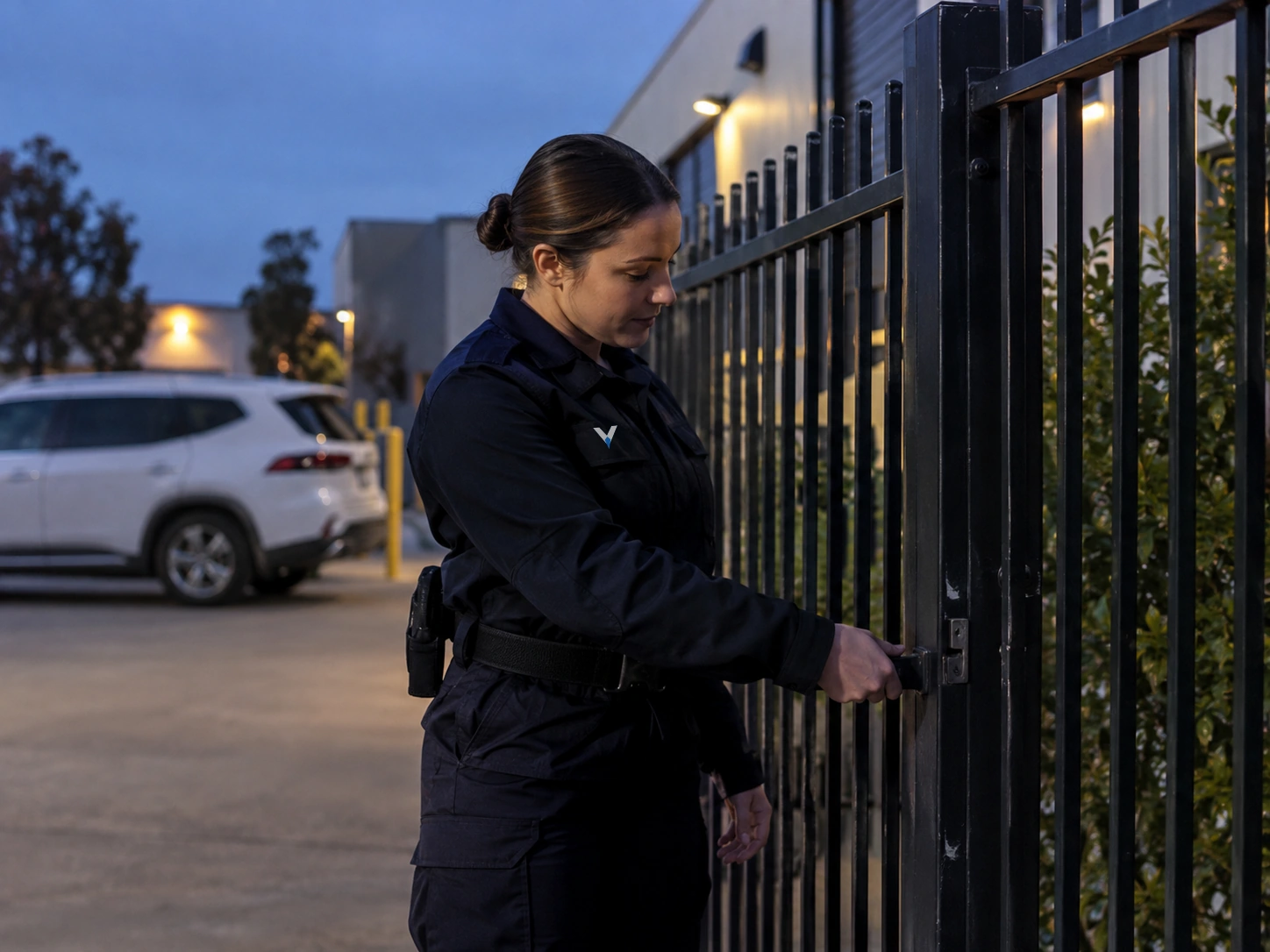
A patrol that cannot be verified is an invoice. A patrol that records where it went, what it found and what happens next is an operational input to the next morning.
The operational problem
The operational problem
Predictable patrols are easy to work around. Unrecorded patrols are impossible to audit. Between the two, most sites are paying for a presence they cannot confirm and a coverage pattern anyone watching could learn in a fortnight.
The things patrols exist to catch — an unsecured roller door, dumped waste, a failed light over a stairwell, someone sleeping in the carpark — are usually discovered the next morning by whoever opens the site, when the options are worse.
Where this service commonly fails
The failure points are predictable. That is what makes them fixable.
Same route, same time, every night
Checkpoints logged as a whole-of-site tick rather than location by location
Findings that arrive as a photo in a text thread and go no further
Lock-up run so early that the last tenant is still trading
Patrol reports that never reach the person who could fix the recurring cause
The VIGILUME approach
How VIGILUME runs patrols
Routes are built around your risk points, then randomised inside agreed windows so the timing cannot be predicted from outside. Each checkpoint is logged individually with a time.
Anything the officer finds becomes an action with an owner, not a note. Recurring findings — the same door, the same light, the same corner — are flagged for review rather than repeated indefinitely.
What is included
- 01Scheduled and randomised patrols within agreed windows
- 02Individually logged checkpoints with time stamps
- 03Lock-up and unlock services
- 04Perimeter, door, gate, stairwell and carpark checks
- 05Hazard, lighting and maintenance observations raised as actions
- 06Alarm response where scope, coverage and licensing are confirmed
- 07Photographic evidence where it is relevant and lawful to capture
- 08Route review against what the patrols are actually finding
What you can expect to see
Evidence, not assurance
- A patrol record showing where the officer was and when
- Overnight findings available before the site opens, not at week's end
- A short list of open actions rather than a long list of observations
- Route and frequency adjusted when the findings say they should be
- Clear separation between what was checked and what was inaccessible
Mobilisation considerations
Before the first shift
- 01Route design walked in daylight and repeated after dark
- 02Checkpoint placement agreed and installed
- 03Key, code and access arrangements documented and tested
- 04Confirmation of who receives overnight findings, and by when
- 05Neighbour and tenant notification where patrols affect access
- Delivered under NSW security licensing; patrol officers hold the relevant licence class
- Alarm response is only offered where response times can be honestly committed to
- Patrols verify condition at the time of attendance; they are not continuous coverage
- Photography is limited by privacy obligations and site rules
Where we deliver it
Priority sectors
Delivered across Greater Sydney — with established coverage in Western Sydney, South West Sydney and Macarthur — and each site assessed on access, supervision and relief coverage before we accept it.
- Neighbourhood retail and shopping centres
- Commercial property and strata
- Warehousing and light industrial
- Council and community facilities
Questions
What clients ask before engaging us
How do we know a patrol actually happened?
Every checkpoint is logged separately with a time stamp, and the record is provided with the reporting. Attendance is verifiable location by location, not as a single tick.
Can patrols cover several sites in one night?
Yes, and patrol runs are planned around travel time and supervision rather than a wide radius on a map. Multi-site patterns are quoted honestly against travel time.
What happens with what the officer finds?
Findings become actions with an owner and a due date. Recurring findings are escalated for a fix rather than logged again next week.
Test whether your current patrols can be verified.
Bring us your existing patrol reports. We will show you what is missing and what a verifiable overnight pattern would look like on your site.