VIGILUME Cleaning
Cleaning around plant, traffic and shift patterns.
Industrial cleaning is scheduling as much as it is method. The work has to fit between forklifts, deliveries and shift changes without becoming the hazard.
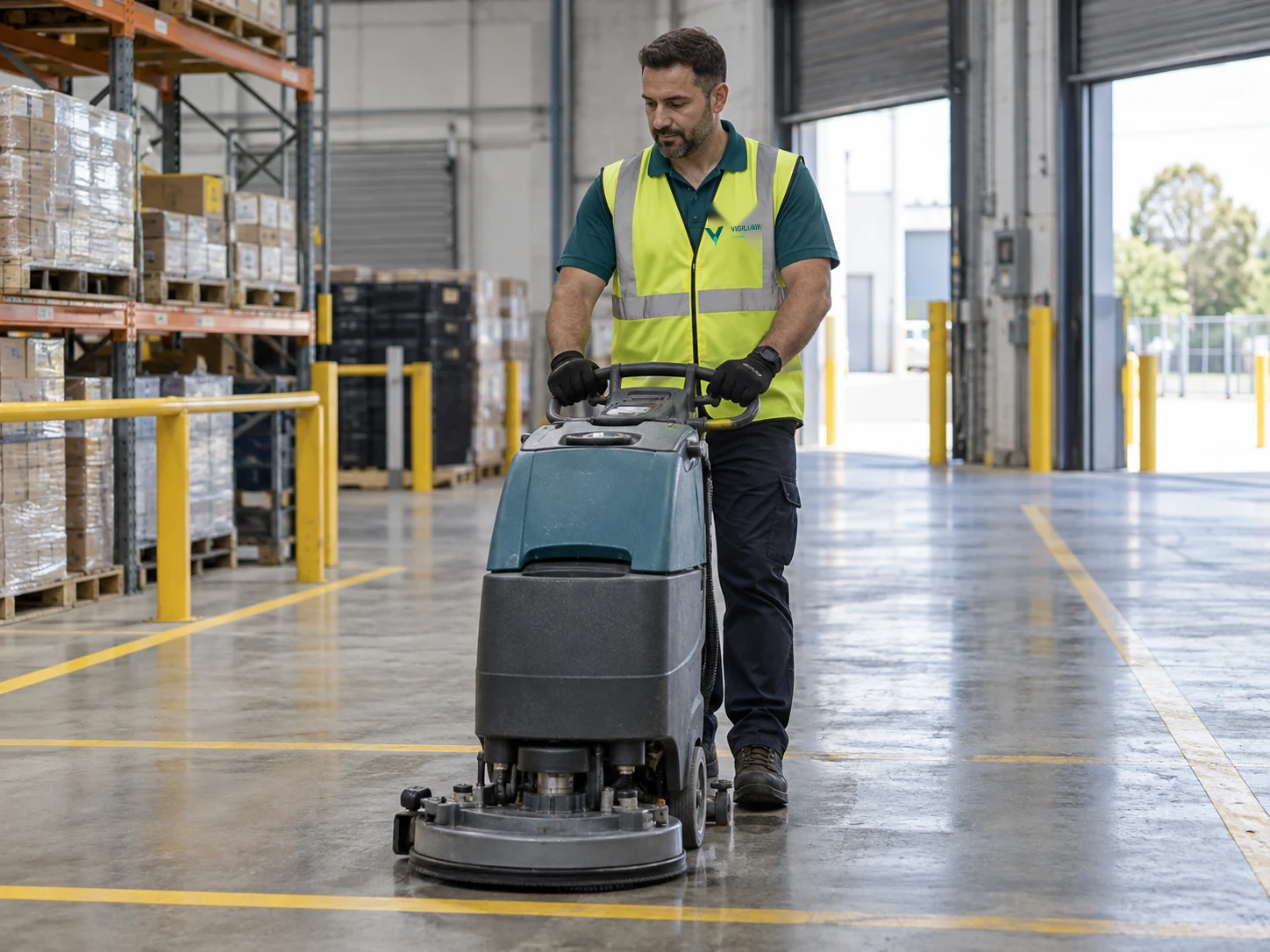
The operational problem
The operational problem
Warehouse floors, dock areas and amenities degrade in ways that create real safety exposure — dust, spills, debris near racking and traffic lanes that lose their line marking.
Cleaning is often squeezed into whatever window is left, which means the highest-risk areas get the least attention and nobody records the condition either way.
Where this service commonly fails
The failure points are predictable. That is what makes them fixable.
Scheduling that ignores traffic management and exclusion zones
Floor programmes built for appearance rather than for slip risk
Amenities scoped for headcount on paper, not headcount on shift
Dock and waste areas treated as nobody's scope
Periodic and shutdown works planned too late to resource properly
The VIGILUME approach
How VIGILUME plans an industrial site
We plan against your traffic management plan: working windows, exclusion zones, isolation requirements and who must be notified before a machine or area is taken out of use.
Floor and amenity programmes are set by risk and shift load, with condition recorded so degradation is visible before it becomes an incident.
What is included
- 01Warehouse floor sweeping and scrubbing programmes
- 02Dock, apron and loading area cleaning
- 03Amenities, crib room and locker cleaning by shift pattern
- 04Office and administration area cleaning
- 05Racking, ledge and high-level dust control where access allows
- 06Waste and recycling stream support
- 07Planned periodic and shutdown works
- 08Condition recording and hazard reporting
What you can expect to see
Evidence, not assurance
- A schedule that fits around your traffic and shift plan
- Floor condition recorded, not assumed
- Amenities resourced against people on shift, not headcount on paper
- Shutdown works planned far enough ahead to be resourced
- Hazards reported into your WHS process the day they are found
Mobilisation considerations
Before the first shift
- 01Review of traffic management, isolation and permit requirements
- 02Confirmation of working windows against shift patterns
- 03Equipment access, charging and storage arranged on site
- 04Chemical register and SDS lodged with the site
- 05Induction and PPE requirements completed before first attendance
- Teams work within your WHS system, traffic management and exclusion zones
- We do not clean live plant, enter confined spaces or work at height without the required controls and tickets
- Hired or site-supplied equipment is documented in the plan rather than assumed
- Some contamination requires specialist licensed contractors we will name rather than attempt
Where we deliver it
Priority sectors
Delivered across Greater Sydney — with established coverage in Western Sydney, South West Sydney and Macarthur — and each site assessed on access, supervision and relief coverage before we accept it.
- Warehousing and light industrial
- Commercial property and strata
- Council and community facilities
Questions
What clients ask before engaging us
Can you work around our shifts?
Yes. Working windows are set against your shift and traffic patterns, and confirmed in the plan rather than negotiated weekly.
Do you supply scrubbers and sweepers?
Equipment is confirmed during scoping. Where machinery is hired or supplied by the site, that is stated in the service plan.
How do you manage safety around plant?
Teams operate inside your traffic management and WHS requirements, including PPE, exclusion zones and agreed working windows.
Related services
Plan cleaning around the traffic plan.
We will review floor risk, amenity load and shutdown timing, and propose a schedule your site can actually accommodate.