VIGILUME Security
A permanent post is only useful if the instructions are.
A stationed officer changes what a site can respond to. What they are told to do — and when to escalate — decides whether that presence produces control or just attendance.
The operational problem
The operational problem
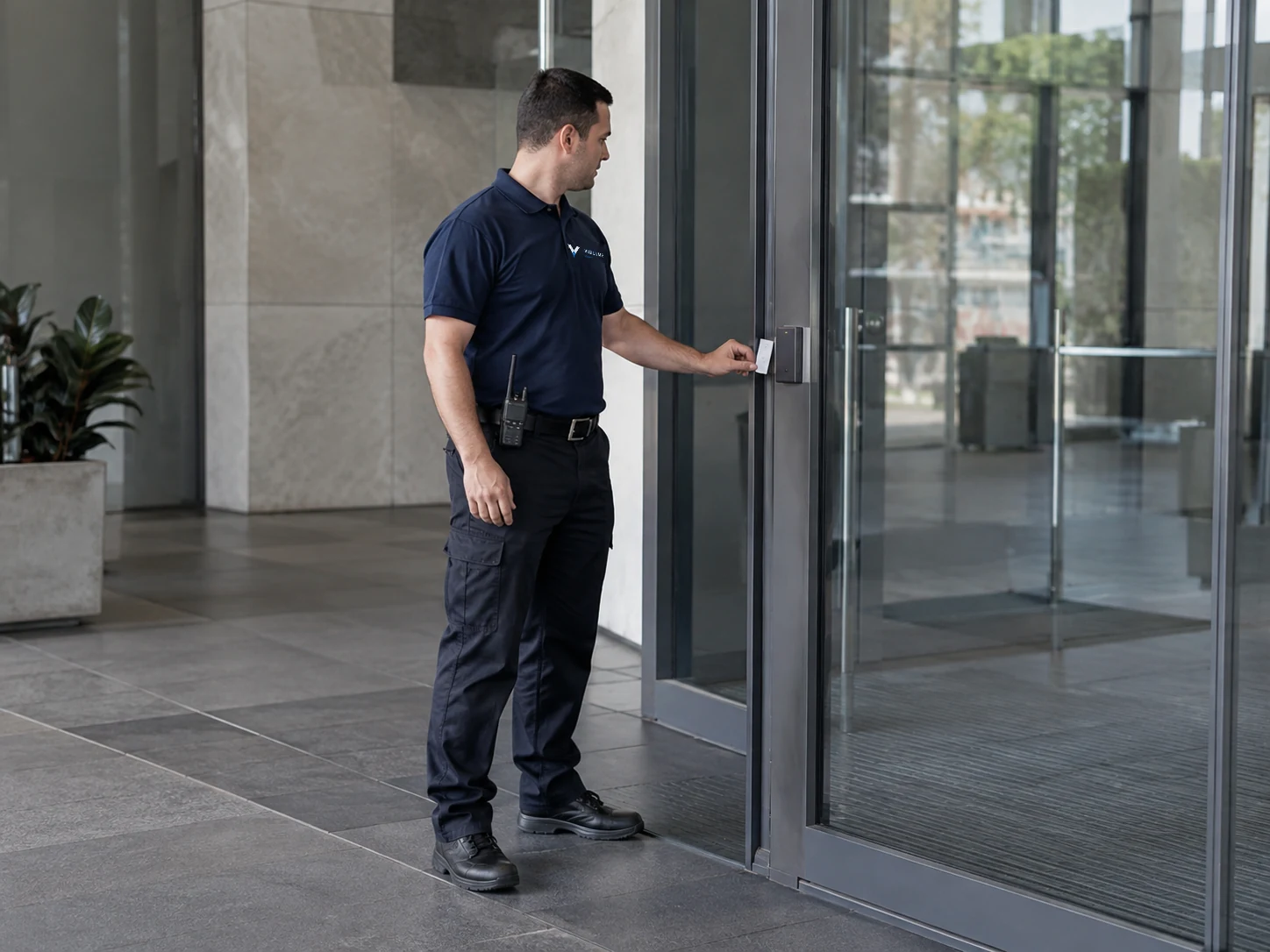
Fixed posts are usually bought as hours. The site gets a body at a door, and the judgement calls — who gets through, what counts as an incident, when to phone someone — are left to whoever is rostered that night.
The cost surfaces later: inconsistent access decisions, incidents described three different ways by three officers, and a property team that finds out about Friday's problem on Monday.
Where this service commonly fails
The failure points are predictable. That is what makes them fixable.
Post orders written once at mobilisation and never revised as the site changes
Rotating officers who never learn the tenants, contractors or quiet corners
Escalation described as 'use your judgement' with no threshold attached
Incident notes too vague to support insurance, police or tenant conversations
Relief shifts briefed by text message minutes before they start
The VIGILUME approach
How VIGILUME runs a static post
We write the post around the site: access points and their rules, movement at each part of the day, contractor activity, the areas that generate complaints, and who must be told about what.
Escalation thresholds are set with you, in plain language, so an officer knows the difference between a note in the log and a phone call at 2am. Rostering favours continuity, so the same faces learn the building.
What is included
- 01Licensed officers rostered to an agreed coverage pattern
- 02Site-specific post orders, maps and induction material
- 03Access control, visitor and contractor sign-in support
- 04Door, alarm and camera monitoring in coordination with your systems
- 05Incident recording with times, locations, people and actions taken
- 06Agreed escalation matrix with named client contacts
- 07Key, pass and equipment register handling
- 08Named supervisor conducting scheduled site checks
What you can expect to see
Evidence, not assurance
- A written post order set you can read and challenge before mobilisation
- Shift logs that read the same way regardless of who was on duty
- Incident reports issued inside the agreed window, not at month end
- Open actions carried forward until someone closes them
- A supervisor who contacts you before you contact us
Mobilisation considerations
Before the first shift
- 01Site walk covering access points, back-of-house routes and blind spots
- 02Confirmation of keys, passes, alarm codes and system access
- 03Officer inductions completed before the first rostered shift
- 04Escalation contacts and after-hours numbers confirmed in writing
- 05Two-week settling review to correct anything the plan got wrong
- Delivered under NSW security licensing; individual licences are verified before deployment
- Officers work within their licence class and within lawful use-of-force limits
- We do not commit to response actions that place staff or the public at risk
- Camera and alarm monitoring depends on the systems and permissions the site provides
Where we deliver it
Priority sectors
Delivered across Greater Sydney — with established coverage in Western Sydney, South West Sydney and Macarthur — and each site assessed on access, supervision and relief coverage before we accept it.
- Neighbourhood retail and shopping centres
- Commercial property and strata
- Council and community facilities
- Warehousing and light industrial
Questions
What clients ask before engaging us
How do you keep the same officers on our site?
Continuity is built into the roster and treated as a service commitment. Where relief is unavoidable, the relief officer is inducted to the same post orders and briefed before the shift.
Who decides what counts as an incident?
You do, during scoping. We propose thresholds based on the site, you adjust them, and they are written into the post orders so reporting is consistent.
Can guarding start before the full plan is finished?
We can mobilise interim coverage with a short-form instruction set, but we say so plainly rather than presenting it as a completed operating plan.
Review the post before you buy the hours.
We will walk the site, draft the instruction set and show you what a properly specified static post looks like for your building.