VIGILUME Cleaning
Presentation has to hold while the centre is trading.
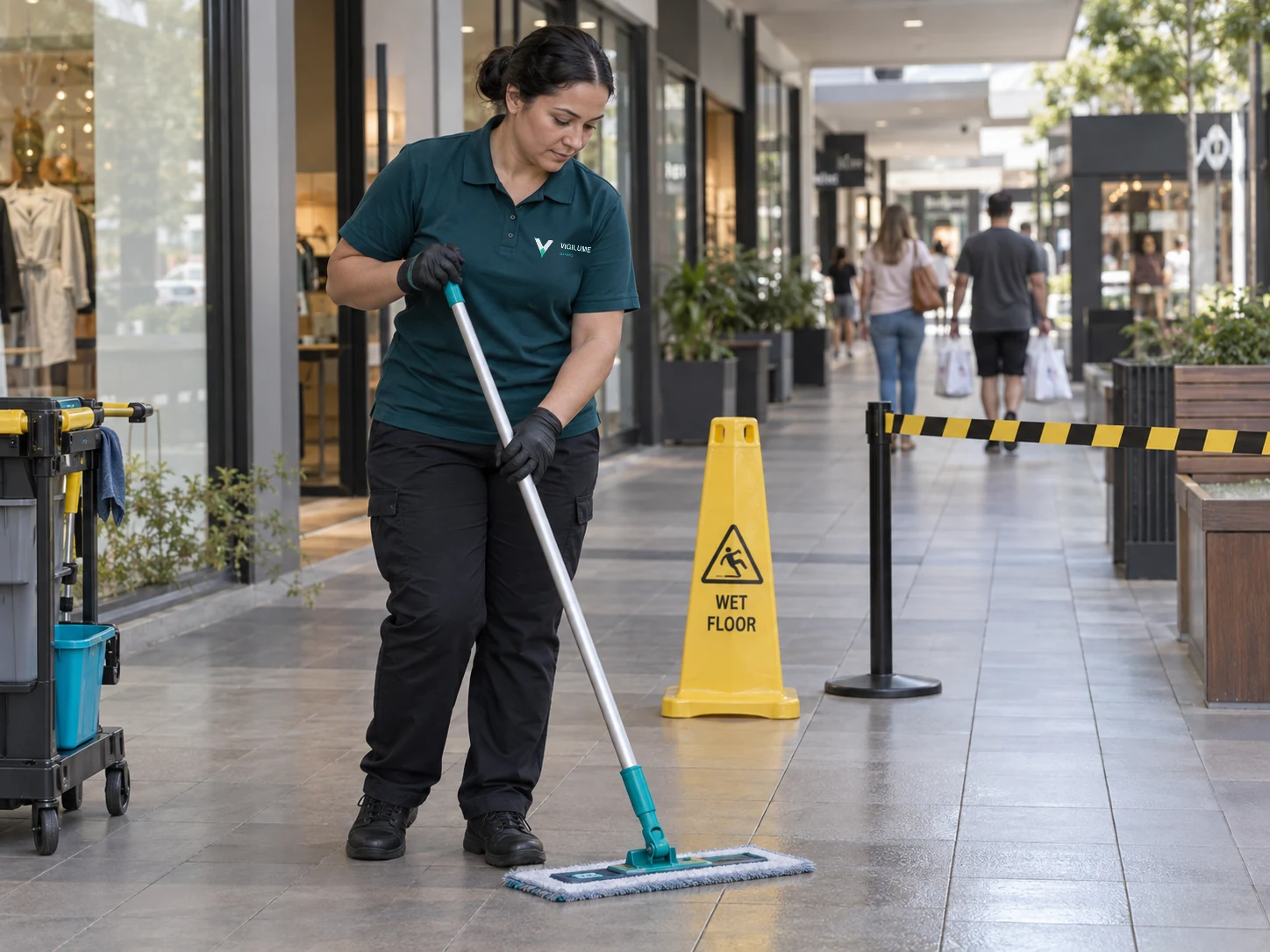
In retail, cleaning is a live service. The standard that matters is the one a shopper sees at 2pm on a Saturday, not the one achieved overnight.
The operational problem
The operational problem
Centres are cleaned overnight to a high standard and then left to degrade through the trading day, with amenities carrying loads they were never scheduled for.
Spills, food court incidents and trolley debris become safety and reputation issues within minutes, and the response depends on someone happening to notice.
Where this service commonly fails
The failure points are predictable. That is what makes them fixable.
Day staffing scoped as a single roaming role across an entire centre
Amenities serviced on a timetable that ignores trading peaks
Spill response depending on chance rather than a route
Food court and bin areas under-resourced on weekends
Periodic floor works deferred until the finish is beyond restoration
The VIGILUME approach
How VIGILUME services a centre
Day cleaning is planned as a route with response time, not a wander. Amenities are serviced against traffic patterns, with checks recorded so condition through the day is visible.
After-hours work handles restoration — floors, entries, food court, back-of-house — and the team reports what it finds, from failing grout to a door that no longer latches.
What is included
- 01Trading-hours presentation and spill response routes
- 02Amenities servicing against trading peaks
- 03Food court, seating and bin area attention
- 04Entry, travelator and glass presentation
- 05After-hours floor care and restorative works
- 06Back-of-house, dock and waste room cleaning
- 07Recorded condition checks through the trading day
- 08Defect and hazard reporting to centre management
What you can expect to see
Evidence, not assurance
- A recorded amenity check history for the trading day
- Spill response measured in minutes against an agreed target
- Weekend resourcing that matches weekend traffic
- Floor care planned before the finish is lost
- Hazards passed to security or maintenance immediately, with an owner
Mobilisation considerations
Before the first shift
- 01Trading pattern review, including weekend and school-holiday peaks
- 02Route design for day cleaning with response expectations
- 03Storage, chemical and equipment arrangements in back-of-house
- 04Tenant and centre management communication protocol
- 05Coordination with security routines where both are engaged
- Tenancy interiors are the retailer's responsibility unless separately engaged
- Wet-floor and hazard controls follow the centre's WHS requirements
- Some restorative work requires closure windows we will schedule honestly
- Response targets are committed to only where staffing supports them
Where we deliver it
Priority sectors
Delivered across Greater Sydney — with established coverage in Western Sydney, South West Sydney and Macarthur — and each site assessed on access, supervision and relief coverage before we accept it.
- Neighbourhood retail and shopping centres
- Commercial property and strata
- Council and community facilities
Questions
What clients ask before engaging us
How fast can a spill be attended?
A target is set during scoping based on centre size and day staffing, and we only commit to a time the roster can actually support.
Do you cover food court peaks?
Yes. Food court and amenity resourcing is scheduled against trading peaks rather than spread evenly across the day.
How does cleaning support centre security?
Cleaning teams are in the centre early and late. What they see — damage, unauthorised access, unsafe waste — is escalated through the same site process as a security finding.
Related services
Assess the centre during trade, not at 5am.
We will review presentation, amenity load and response times across a trading day and show where the schedule is out of step with the traffic.