VIGILUME Security
On an active site, security is a program risk.
Theft costs money. Unrecorded access costs days — in investigations, WHS questions and induction disputes that stop work while someone reconstructs who was on site.
The operational problem
The operational problem
Sites lose plant, copper, tools and hours to unauthorised access, usually through a gate that was propped open for a delivery and never closed behind it.
The bigger exposure is records. When access logs are incomplete, induction status cannot be proven, incident investigation stalls and the site manager ends up personally running security on top of the build.
Where this service commonly fails
The failure points are predictable. That is what makes them fixable.
Gate treated as a traffic function rather than a control point
Access logs kept on paper and never reconciled to inductions
Coverage set at the start of the build and never changed as risk moves
Deliveries admitted without verification during busy periods
Hoarding and perimeter checks skipped once the structure is up
The VIGILUME approach
How VIGILUME secures a build
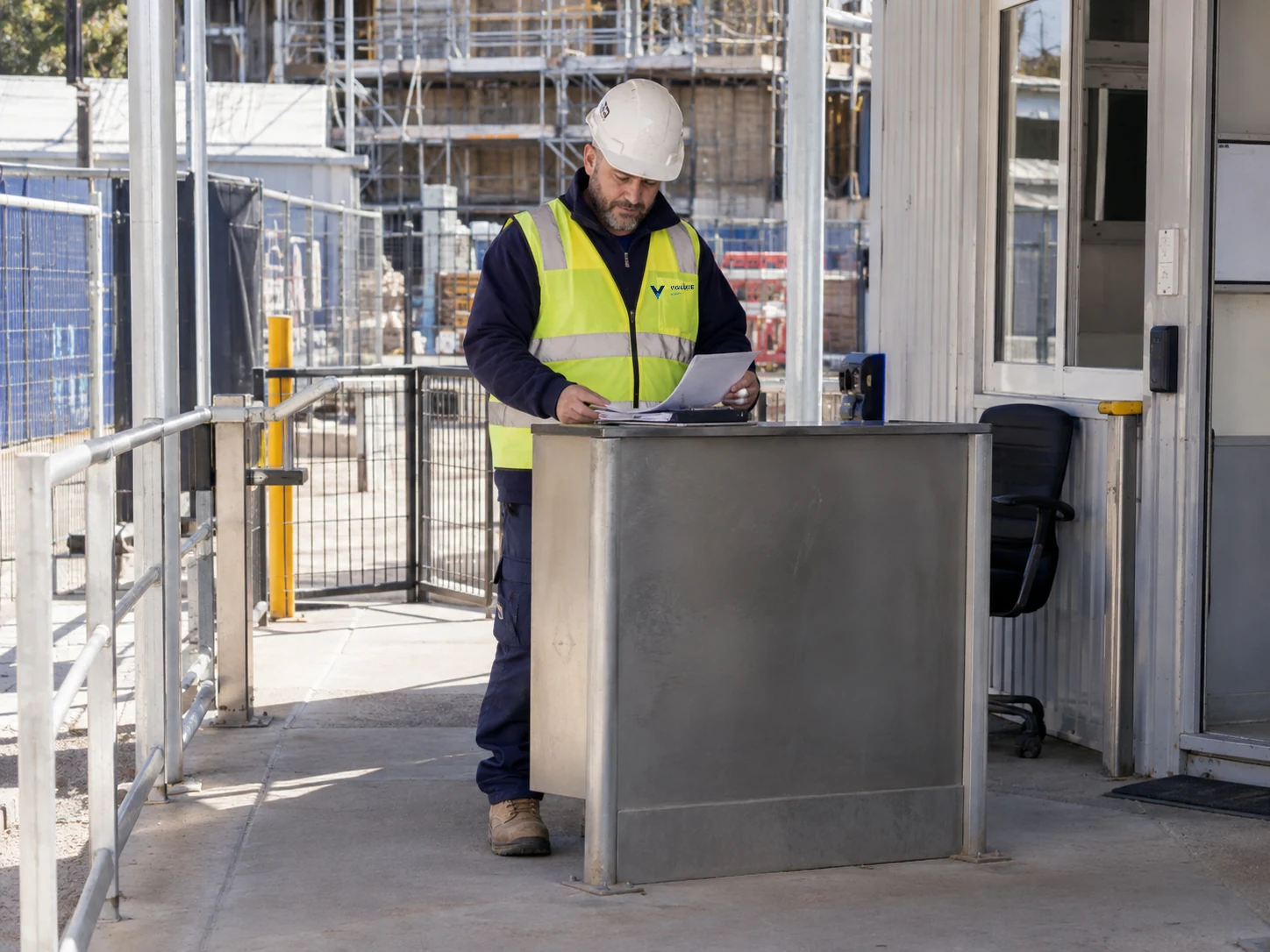
The gate is run as a control point: verified identity, induction status checked, deliveries confirmed against expected movements, and an access record that reconciles at the end of each day.
After-hours coverage is matched to the stage of the build — early works, structure, fit-out, handover — and revised at agreed milestones rather than left as a fixed line item.
What is included
- 01Gatehouse and site access control
- 02Induction and contractor verification checks
- 03Delivery and vehicle movement management
- 04Materials, plant and compound protection
- 05After-hours static coverage or patrols by build stage
- 06Perimeter, hoarding and fencing checks
- 07Incident and near-miss recording
- 08Coordination with site management and WHS requirements
What you can expect to see
Evidence, not assurance
- A daily access record that reconciles against inductions
- Overnight findings available at pre-start, not at the end of the week
- Coverage recommendations tied to program milestones
- Near-misses recorded in a form your WHS system can absorb
- Clear notice when the plan no longer suits the stage of the build
Mobilisation considerations
Before the first shift
- 01Site induction completed by every officer before commencing
- 02Gate procedure agreed with site management and principal contractor
- 03Delivery schedule and expected-movements process established
- 04Escalation path for after-hours intrusion agreed in writing
- 05Milestone review dates set at mobilisation
- Delivered under NSW security licensing; officers work within their licence class
- Officers operate within the principal contractor's WHS system and site rules
- Officers do not direct plant, perform traffic control without the relevant ticket, or supervise trades
- Equipment we do not supply is stated plainly rather than assumed available
Where we deliver it
Priority sectors
Delivered across Greater Sydney — with established coverage in Western Sydney, South West Sydney and Macarthur — and each site assessed on access, supervision and relief coverage before we accept it.
- Warehousing and light industrial
- Commercial property and strata
- Council and community facilities
Questions
What clients ask before engaging us
Can coverage change as the build progresses?
Yes, and it should. Coverage is reviewed at agreed milestones and adjusted with you rather than carried unchanged to practical completion.
Do officers complete our site induction?
Every officer completes your induction before their first shift, and induction verification can form part of their gate responsibilities.
Do you provide traffic control?
Not unless the relevant tickets and licensing are held for that specific site. Where we cannot provide it, we say so rather than absorbing it informally.
Start with the gate and the access record.
We will review how access is controlled and recorded on your site, and what that exposes if an incident is investigated.